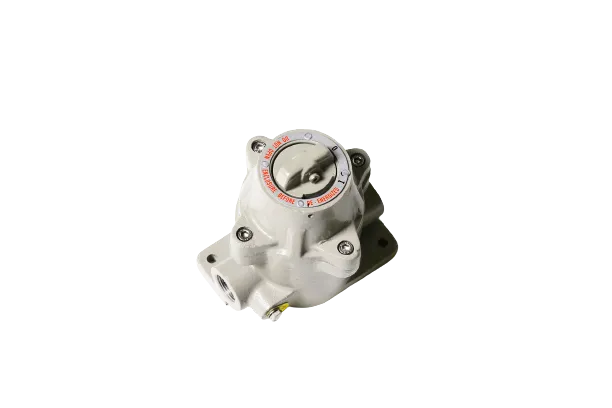
EFSC.22-A
EFSC.22-AProtaş EFSC series electric switches have Ex d class flameproof (Exproof) protection type and are classified as II 2G Ex d IIB T6 Gb & II 2D Ex tb IIIC T65ºC Db.
It can be preferred as NPT or Metric threaded.
What Are Ex-proof Electrical Switches?
Ex-proof electrical switches are a crucial part of systems designed to be used in potentially explosive environments, either as electrical current interrupters or systems that enable the current to change direction from one conductor to another. They are specially designed to prevent the ignition of flammable gases, vapors, or dust that may be present in the circuit.
Additionally, they are designed to meet strict safety standards such as ATEX and IECEx, which set guidelines for the use of electrical equipment in explosive atmospheres.
In general, Ex-proof electrical switches are a critical component of many industrial systems because they help ensure the safety of workers and equipment operating in potentially hazardous environments.
Where Are Ex-proof Electrical Switches Used?
Ex-proof electrical switches are widely used in industries such as oil and gas, chemical processing, and pharmaceutical manufacturing, where there is a risk of explosion due to the presence of flammable substances. They are also used in underground mines and other locations with a high risk of explosion.
- Protection Type:
- d Type Protection
- Protection Type:
- d Type Protection
- Body:
- Steel
- Body:
- Aluminum ETIAL 140
- NPT:
- 1 1/4”
- NPT:
- 3/4”
- Metric:
- M40x1.5
- Metric:
- M25x1.5
- External Dimensions / Weight:
- 23×88mm / 0.50kg
- External Dimensions / Weight:
- 150.5×130×60mm / 1.4kg
- ATEX Mark:
- Ex d IIC IP 65
- Power (Watts):
- 2×20
- Explosive Class (Zone):
- Zone1 or Zone2
- ATEX Mark:
- II 2G Ex d IIB T6 Gb & II 2D Ex tb IIIC T65ºC Db
- Certificate:
- TSE 14.31.35-EX / 175
- Explosive Class (Zone):
- Zone1 or Zone2
- Standards:
- EN 60079-0<br> EN 60079-1<br> EN 60079-31<br>
- Certificate:
- FTZU 07 ATEX 0284X
- Standards:
- EN 60079-0<br> EN 60079-1<br> EN 61241-0<br> EN 61241-1<br>